
- Testosterone influences the body and the brain first in the womb as the child grows, then again shortly after birth, before another explosion of changes occurs in puberty
- It shapes behaviour and our social environment; it triggers a chain of events
- At primary schools: children when running around – boys exhibit more speed, more courage, more inquisitiveness than girls.
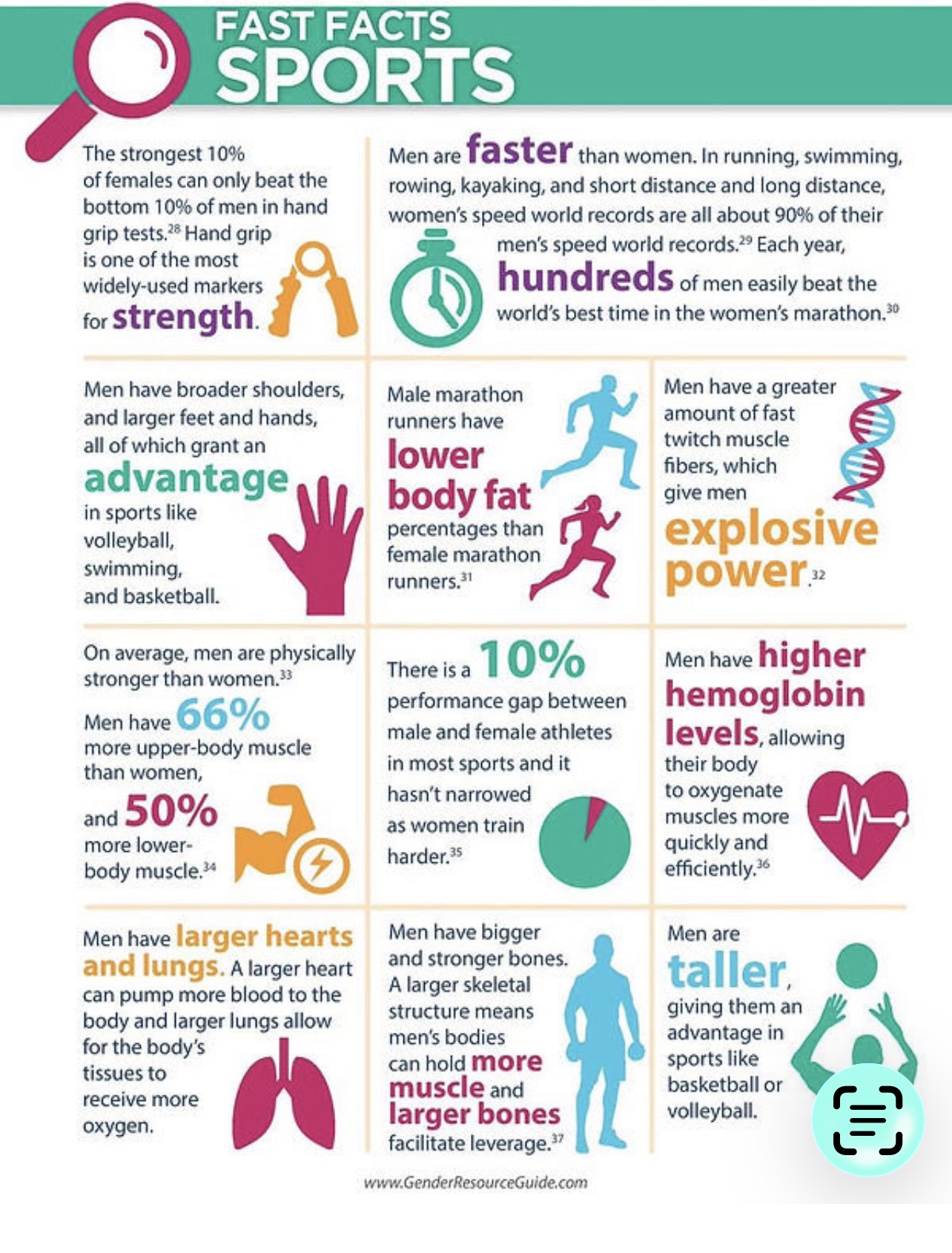
- Females on average are 9% shorter: NHS 2018 states average young adult heights in England as: Female 5ft 41⁄2“; Male 5ft 10”; 50% of males are taller than some 97% of females [when plotted across population]
- Men are 40 to 50% muscle by weight and women are about 30 to 35% muscle by weight. This equates to Males having around 40% more muscle mass even when height is taken into account
- Men have 40- 50% greater upper limb strength
- Men have 20-40% greater lower limb strength
- Men on average have larger heart and lung capacity and higher metabolic rates. This allows larger haemoglobin pools which can feed them more oxygen
- Men’s lungs are bigger. Adult female lungs are 10–12% smaller than males of same height and age and so men have a bigger airway capacity
- The strongest 10% of females can only beat the bottom 10% of males in a hand grip contest: Female handgrip at 329 Newtons; Male handgrip at 541 Newtons. Highly trained female athletes still have weaker hand grip than 75% of untrained male subjects
- Female’s ligaments are thinner and softer than male’s which is why female in combat training sustained far more injuries
- Men’s longer arms give a greater reach and can generate more speed on a cricket ball
- Men’s bigger hands bands allow them to palm basketballs more easily
- Men’s longer legs and narrower pelvis is lead to better running gates
- Males need fewer strides to cross the distance and the strides they take are more efficient
- Females have a significantly higher Q-angle and hip-joint internal-rotation angle as well as a significantly lower arch height index than males this means that women are much more susceptible to lower limb and foot or ankle injuries
- Men have 40% less body fat
- Men’s muscle is denser, with more and larger fibres. Higher numbers of muscle stem cells make new muscle fibres, donate nuclei to strengthen existing muscle fibres and help healing.
- Men have higher proportions of fast twitch fibres responsible for explosive movement.
- Men have stiffer connective tissue – ligaments and tendons are tighter springs – which means greater storage of potential energy and even more explosive power, so male muscles can move way more quickly and with far greater force than female muscles.
- Females have more hypermobility around the joints.
- Men do not ovulate and have periods or any of the associated discomfort and inconvenience – women take medication (pill/ depo-provera injection) and ruin their bones in order to not have a period, in sailing, rowing, long distance cycling etc etc.
- Men do not go through menopause.
- The brain gets masculinised not just the body, it influences the development of neural circuitry that then gets activated later in puberty.
- It changes everything not just at puberty but for the whole of male life
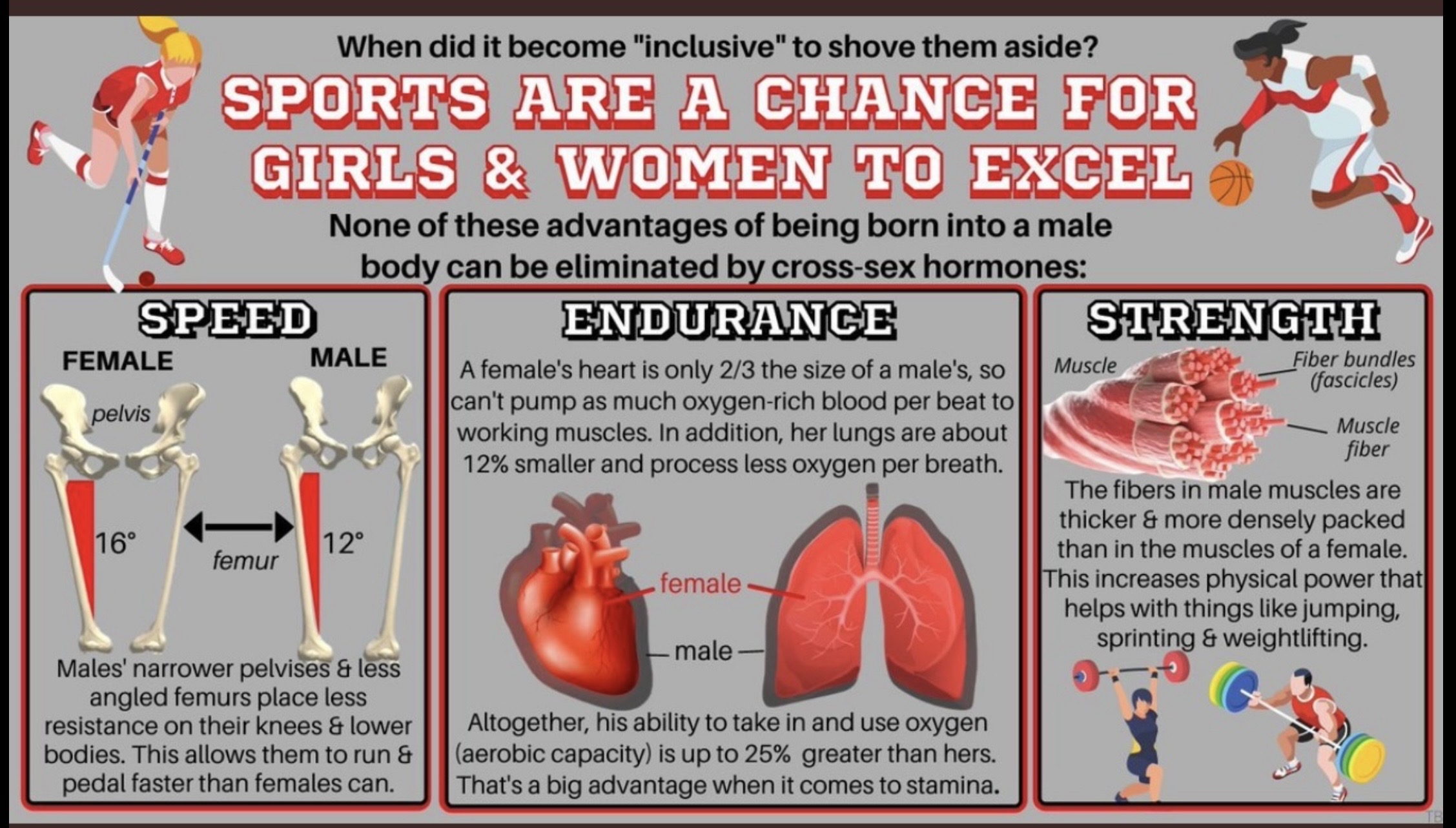 The power of testosterone is precisely why there are 2 separate categories men and women/ male and female: The definitions of which are biological.
Evidence shows it has a lasting impact from the life development of the body – but can be flushed from the body in around 3 days.
It is openly expressed that a Female to male TG has less advantage so can compete in any category, before transitioning because they are XX and have less than 2.5nmol/L testosterone in the system . But once they start to transition, they will have elevated levels of Testosterone, so cannot compete in the female category.
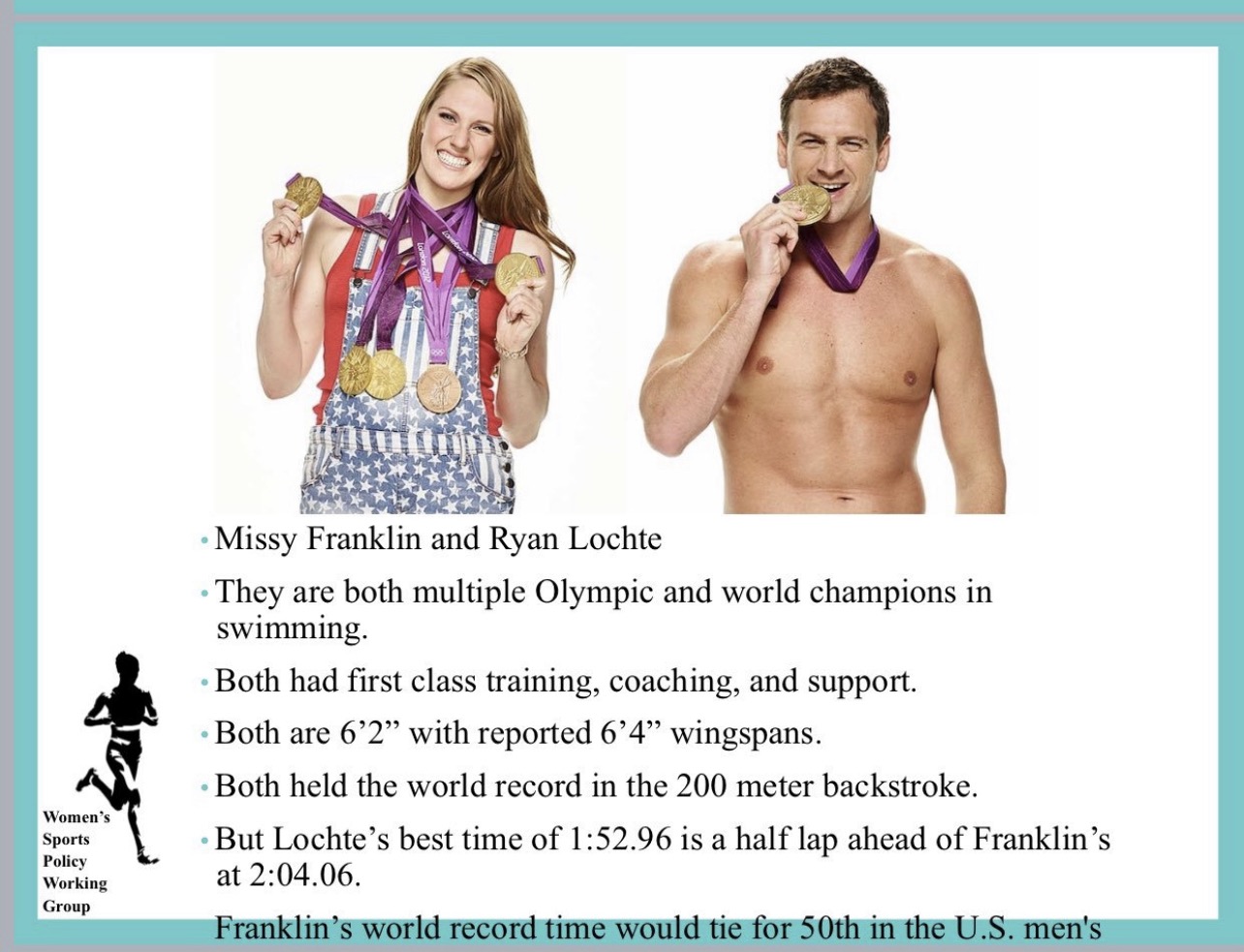 The Impact the above will have on Sport:
The muscle strength, physiological and size differences are reflected in sporting performance with males having:
- males can run faster, jump longer, throw further and lift more than females (muscle endurance and strength in sailing will mean an ability to hike longer, pump sails with more tenacity)
- 10-12% faster times for most linear swimming and running events
- 30% when throwing various objects
- 20% better results in jumping events
- 35% greater weightlifting ability in weight-matched males and females
- 50% greater weightlifting ability if use NHS average sizes for males / females
- male of equal weight to a female but not taller will punch 160% harder
- Women lose fair and meaningful opportunities